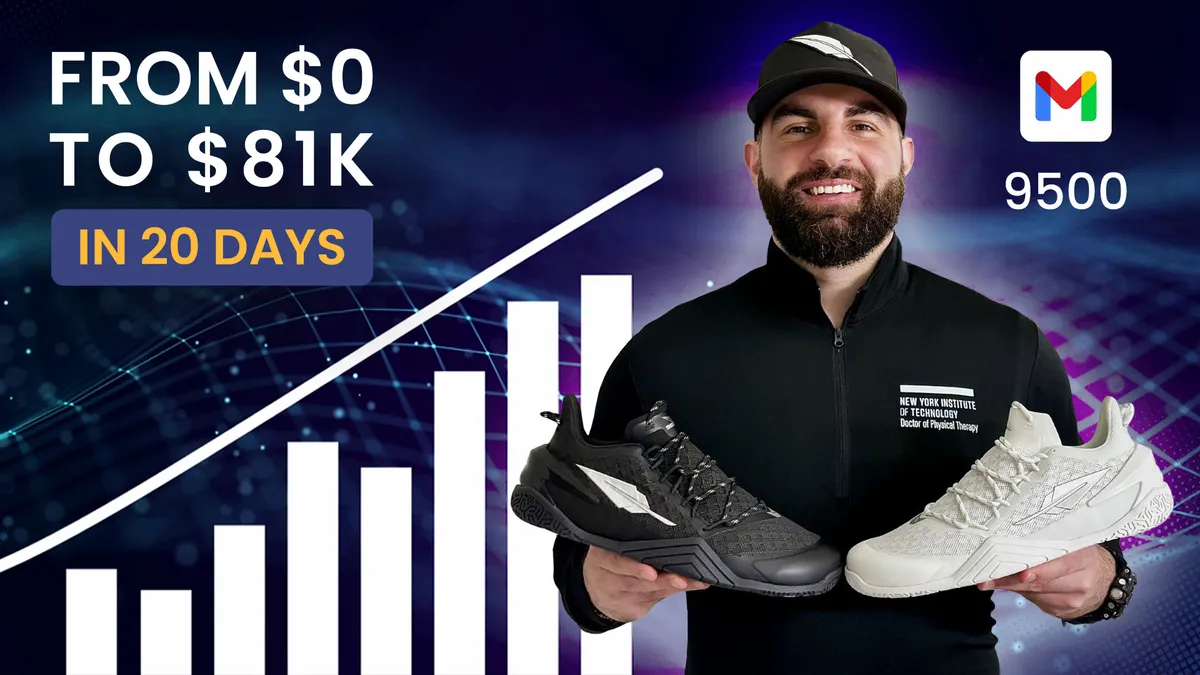
From 0 to $81,000 in 20 Days: How Email Marketing Launched This Activewear Brand
From 0 to $81,000 in 20 Days: How Email Marketing Launched This Activewear Brand
Funded in 28 minutes.
That's how long it took Symbol — a startup activewear brand built around anatomically shaped footwear — to hit their Kickstarter goal on day one of their launch.
By day 20, they'd raised $81,000. 115% of their target. And they'd smashed their internal goal of $60,000 without breaking a sweat.
The secret wasn't a viral social media post. It wasn't a PR feature. It wasn't even a particularly large email list.
It was the emails.
The Situation Nobody Warns You About
Sofo — physical therapist by day, sneaker brand founder by night — had been building Symbol for a couple of years before the Kickstarter launch.
He had a product he believed in. He had a growing email list of around 5000 people. He had a launch date.
What he didn't have was time.
During his clinical rotation, Sofo was in the facility at 5:30am and sometimes wouldn't leave until 6pm. Then came school work. Then came manufacturer conversations. Then came building out the Kickstarter page.
Email was always on the list. It just never made it to the top.
"The email component takes some effort — especially if you want to create really nice campaigns and designs and copy. You have to meticulously sit through it, read it, ensure that if I'm a customer looking at this email, am I going to be drawn to it? Am I going to click through?"
This is the situation most founders find themselves in. Not because they don't understand email. But because doing email well — genuinely well — takes time and expertise that most founders are already spending elsewhere.
What a Kickstarter Email Strategy Actually Looks Like
Here's where it gets interesting.
Email for a Kickstarter launch is fundamentally different from email for a standard eCommerce brand. And most email marketers don't understand that difference.
With a regular eCommerce brand, the email job is simple: get the subscriber to buy the product. Now. One click, one purchase, done.
With a Kickstarter, you're asking someone to commit money to a product they can't hold in their hands yet, from a brand they may have only just discovered, with a delivery date that's months away.
That requires a completely different approach.
"With a startup it's more about getting recognition and having people discover us. It's not your typical 'hey, buy this now.' It's more taking a customer through a journey."
The strategy GrowMyMail built for Symbol was exactly that — a journey. From first contact, through education about the product and the brand's mission, to the VIP reservation process, to collecting the data Symbol needed from customers before going into production.
That last part is worth slowing down on.
Symbol needed to know what sizes customers wanted. What colourways. How many pairs. This wasn't just marketing data — it was manufacturing data. Information they could take directly to their supplier to plan production.
The email programme wasn't just selling. It was doing the job of a pre-launch research operation at the same time.
The Moment Everything Changed
Sofo describes the moment the first email went out.
"We got something like 80 reservations on the spot. And I just remember looking at my phone and seeing all the reservations coming in and I was like — oh my god, what just happened?"
80 reservations. From one email.
That's not luck. That's what happens when you send the right message to people who have already been warmed up, educated, and given a clear reason to act.
The email list had been sitting at around 5,000 people when Sofo first came to GrowMyMail. By the time the Kickstarter launched, it had grown to 9,500.
Those extra 4,500 people didn't appear by accident. They were the result of a consistent email strategy that kept Symbol visible, kept the audience engaged, and kept building anticipation for what was coming.
The Concern Every Founder Has (And How It Gets Resolved)
Before the partnership started, Sofo had a specific worry.
Not about cost. Not about timelines. About fit.
"One of the things I was concerned with was — if we're working with an email marketing specialist, do they have any experience working with startups? Because with a startup it's more about getting recognition. It's not your typical eCommerce situation."
This is a fair concern. And it's one more founders should be asking before they hand their email programme to anyone.
The difference between a generic email agency and one that actually understands your business is the difference between campaigns that sound like everyone else and campaigns that move product.
For Symbol, the resolution came fast. Within days of onboarding, email templates were already on Figma for review. The feedback loop was tight — Sofo would make small revisions, the team would turn them around quickly, and within a short window the campaigns were live.
"That would take me significantly less time than if I was sitting there designing out the emails myself."
Which sounds obvious. But when you're a bootstrapped founder doing everything alone, offloading even one thing properly — not just handing it off and hoping — changes the entire rhythm of the business.
What the Numbers Actually Looked Like
Let's be specific, because the numbers here tell the whole story.
Symbol went into the Kickstarter with a public goal of $10,000 — deliberately conservative, to ensure they funded fast and created momentum.
Their internal goal was $60,000.
They raised $81,000 in 20 days.
They funded in 28 minutes on day one.
One of their early goals was converting 10% of their email list into reservations. They smashed it.
These aren't numbers that happen when you blast a generic campaign to a cold list. They happen when you've spent weeks building relationships with the people on that list — educating them, getting them excited, answering their questions before they even asked, and making the act of reserving feel like a natural next step rather than a sales pitch.
The Part Most Brands Skip
Sofo mentions something in the interview that most founders gloss over when they talk about email marketing.
Communication.
Not the emails sent to customers. The communication between the brand and the agency managing the account.
"The constant communication was a major factor. Being able to consistently communicate through Slack — updating each other on progress, what the next steps are, what you guys were working on, when I should expect drafts to review."
This sounds like a small thing. It isn't.
When you're a founder with a hundred moving parts, not knowing what's happening with your email programme — or having to chase someone for updates — adds stress you don't need. The best agency relationships feel like having an extra team member who actually keeps you in the loop.
When that communication is there, trust builds fast. And when trust is there, the work gets better — because the founder shares more context, the agency understands the brand more deeply, and the emails start to sound less like marketing and more like the brand actually talking.
What You Can Take From This
The Symbol story isn't really about Kickstarter. It's about what happens when you take an email list seriously before the moment you need it.
Most brands treat email as a launch tool — something you turn on when you have something to sell. Symbol built their list, nurtured it, educated it, and by the time the Kickstarter went live, the list was ready.
Build the list before you need it. 9,500 engaged subscribers didn't appear on launch day. They were built over months of consistent communication.
Email for launches is about the journey, not the transaction. Especially when the customer can't receive the product immediately, you need to take them from awareness to belief to commitment — and that takes more than one email.
Use email to collect data, not just drive sales. Symbol used their email programme to gather size and colourway preferences before going into production. That's email doing the work of a market research operation.
Communication between brand and agency is part of the product. The quality of the collaboration directly affects the quality of the output. Pick a team that keeps you informed.
Think your email list could be working harder for your brand? Visit growmymail.com for a free Klaviyo audit and 90-day roadmap — no commitment required.